




 https://www.linkedin.com/company/network-switch/


Table of content
Answer first: MTP® is US Conec's branded MPO connector; MPO is the standards-defined multi-fiber connector format. Standards-compliant MTP® and MPO connectors can intermate, but loss, polarity, gender, fiber count, end-face, cleanliness, and exact assembly still determine link suitability. See the US Conec connector FAQ, the single-mode versus multimode guide, and the DCI guide.
This article offers some side-by-side comparisons between MTP and MPO cables, including the aspects of mechanical design, optical performance, and application.
MTP® vs MPO Cable – What Are They?
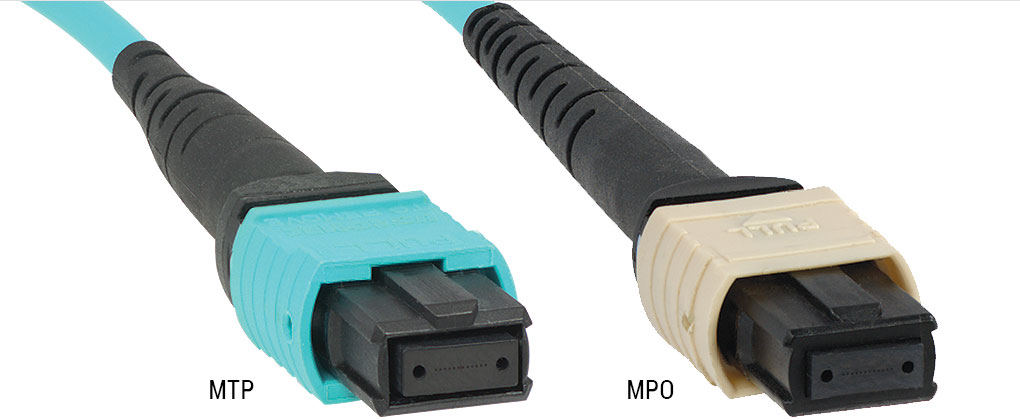
MPO is the industry acronym for multi-fiber push-on. IEC 61754-7 and TIA-604-5 are commonly cited connector-interface standards. Fiber count, keying, polarity, gender, end-face, loss grade, cable type, and application must be verified for the exact assembly.
MTP® is a US Conec brand of MPO connector. US Conec documents compliance and intermateability with standards-compliant MPO-style connectors, while performance remains dependent on the exact components, termination, polish, cleaning, mating partner, and test result. Use the SFP/QSFP/OSFP guide to match the cable assembly to the optical interface.
Comparison between MTP® and MPO Cable.
Mechanical Designs
Pin clamp: US Conec documents a metal pin clamp in its MTP® design. Do not assume every generic MPO assembly uses one construction or durability level; compare the exact connector manufacturer and part number.

Floating ferrule: US Conec documents ferrule float as an MTP® design feature intended to help maintain physical contact under load. Actual optical performance must be verified on the terminated and cleaned assembly.
Guide pins: US Conec documents tightly controlled stainless-steel elliptical guide-pin tips for MTP® connectors. Wear and debris still depend on connector condition, inspection, cleaning, alignment, and handling.

Detachable housing: US Conec documents a removable MTP® housing for certain rework and gender-change operations. Confirm that the exact connector and trained procedure support the intended change before field modification.
Optical Performance
Insertion loss: connector brand alone does not establish the link loss. Use the exact connector grade, fiber type, mating pair, number of connections, termination quality, cleanliness, and measured loss in the link budget.
Reliability: inspect and clean before mating, verify polarity and gender, and record insertion-loss and return-loss results. No universal service-life advantage is asserted for every MTP® or MPO cable assembly.
Conclusion
MPO is the standards-defined connector format and MTP® is one branded MPO implementation. Select the exact assembly from interface, fiber count and type, polarity, gender, keying, connector grade, loss budget, environment, inspection and test requirements—not from the name alone.
MTP® and MPO Cable FAQs
Q1: Is MTP® connector the same as MPO connector?
A: MTP® is a US Conec-branded MPO connector. It is designed to comply and intermate with standards-compliant MPO-style connectors; verify the exact assembly and application.
Q2: Can you mix MTP® connectors with MPO connectors?
A: Standards-compliant MTP® and MPO connectors can intermate. Compatibility of the complete link also requires matching fiber type, keying, polarity, gender, end-face, loss budget, cleanliness, and interface.
Q3: MTP® or MPO which one cable shall I select in my network applications?
A: Choose by the exact optical interface, fiber type and count, polarity, gender, keying, connector grade, loss budget, environment, inspection plan, availability, and tested assembly—not by brand name alone.
Q4: What are the number of fibers MTP® / MPO connectors can be supported?
A: Fiber counts vary by connector style and product. Confirm the exact transceiver or cassette interface, connector standard, manufacturer part number, polarity, gender, key orientation, and cabling design.
Q5: Why is polarity important for MTP®/MPO cabling systems?
A: Polarity makes sure that the transmit and receive signals are going to the correct places in a fiber optic system. Right polarity is not insignificant to MTP®/MPO cabling systems.
Q6: What are some common uses of MTP® and MPO cables?
A: MPO-format assemblies are used in parallel-optics, trunk, cassette, and breakout designs. Suitability depends on the exact optical standard, lane mapping, fiber type and count, polarity, loss budget, and tested components.
Q7: What is the maximum advised mating cycle of MPO/MTP® connectors?
A: Mating-cycle ratings are product- and standard-specific. US Conec documents its MTP® design against stated requirements, but any procurement decision should use the exact manufacturer data sheet plus inspection, cleaning, and test records.
Did this article help you or not? Tell us on Facebook and LinkedIn . We’d love to hear from you!


